

This Bluetooth Flaw Turns Popular Headphones Into Eavesdropping Devices | Tech News
📰 Published on: 2025-06-27 11:52:00 | Author: Gavin Phillips
🔗 Source: www.makeuseof.com


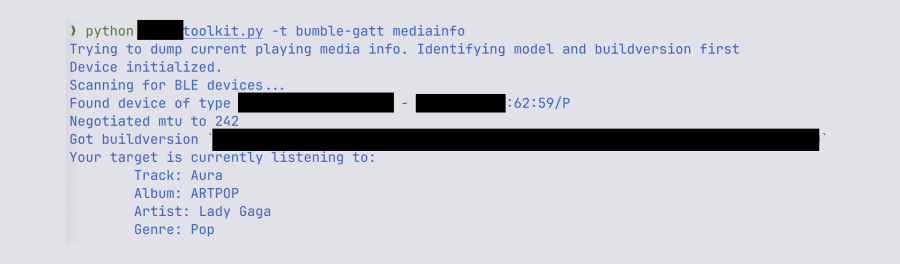
A newly disclosed set of Bluetooth vulnerabilities in Airoha-powered audio devices could allow attackers to eavesdrop on users, hijack connections, and extract sensitive information—all without the victim’s knowledge.
What Is the Bluetooth Headphone Vulnerability?
Security researchers at ERNW have revealed serious authentication flaws in both Bluetooth Classic and BLE (Bluetooth Low Energy) services used by Airoha System-on-Chip (SoC). These vulnerabilities affect some of the most popular headphones and earbuds on the market, including models from Sony, Bose, JBL, Jabra, Marshall, Beyerdynamic, and more.
While you may not have heard of Airoha, its hardware is widely used in many well-known audio products.
There are three main issues identified:
- CVE-2025-20700: Missing Authentication for GATT Services
- CVE-2025-20701: Missing Authentication for Bluetooth BR/EDR
- CVE-2025-20702: Critical Capabilities of a Custom Protocol
Notably, CVE-2025-20702 has been rated as near-critical (CVSS 9.6), making this a high-priority issue for both manufacturers and security-conscious users.
Combined, these vulnerabilities could allow an attacker to turn Bluetooth headphones into eavesdropping devices, using the built-in microphones to record conversations. One attack method lets hackers redirect sound to listen to the user’s surroundings, while another exploits the relationship between paired devices to issue secret commands or extract data.
Are Your Bluetooth Headphones at Risk?
The good news is that exploiting these vulnerabilities requires the attacker to be physically close to the target device, due to the short-range nature of Bluetooth. This makes large-scale attacks unlikely.
According to ERNW’s report, the following headphones are confirmed to be vulnerable:
| Brand | Product Names |
|---|---|
| Beyerdynamic | Amiron 300 |
| Bose | QuietComfort Earbuds |
| EarisMax | Bluetooth Auracast Sender |
| Jabra | Elite 8 Active |
| JBL | Endurance Race 2, Live Buds 3 |
| Jlab | Epic Air Sport ANC |
| Marshall | ACTON III, MAJOR V, MINOR IV, MOTIF II, STANMORE III, WOBURN III |
| MoerLabs | EchoBeatz |
| Sony | CH-720N, Link Buds S, ULT Wear, WF-1000XM3, WF-1000XM4, WF-1000XM5, WF-C500, WF-C510-GFP, WH-1000XM4, WH-1000XM5, WH-1000XM6, WH-CH520, WH-XB910N, WI-C100 |
| Teufel | Tatws2 |
However, since Airoha chipsets power millions of Bluetooth audio devices, the actual number of affected products could be much higher.
How to Keep Your Bluetooth Headphones Safe
The most important step is to watch for firmware updates for your Bluetooth headphones or earbuds. Airoha has already developed a fix, but as of June 25, 2025, ERNW reports that “we are not aware of any fixed firmware release.”
Manufacturers are likely preparing to release patches as part of their regular update cycles. In the meantime, users of affected headphones should:
- Check for firmware updates using the official app
- Avoid using affected models in sensitive environments
- Stay alert for security advisories from your headphone brand
While exploiting this flaw requires technical skill and close proximity, the discovery highlights the growing security risks of modern consumer electronics. As headphones become gateways for digital assistants, calls, and music, vulnerabilities like this can pose serious privacy threats.
This article was automatically curated by MakeUseOf for tech enthusiasts.